

Dear Musician: Stop. You’re Doing It Wrong.
• ⋆ by Auriel ✴︎ September 15, 2025 ⋆•
Have you ever caught yourself running through your repertoire over and over again, only to realize that you’ve been in the practice room for over four hours, but you’re still stuck on that same passage?
If your answer is yes, then you are likely a victim of mindless practicing.
It is one of the biggest traps musicians fall into, and although it may seem insignificant or harmless, it can actually destroy your progress and keep you from ever achieving your full potential.
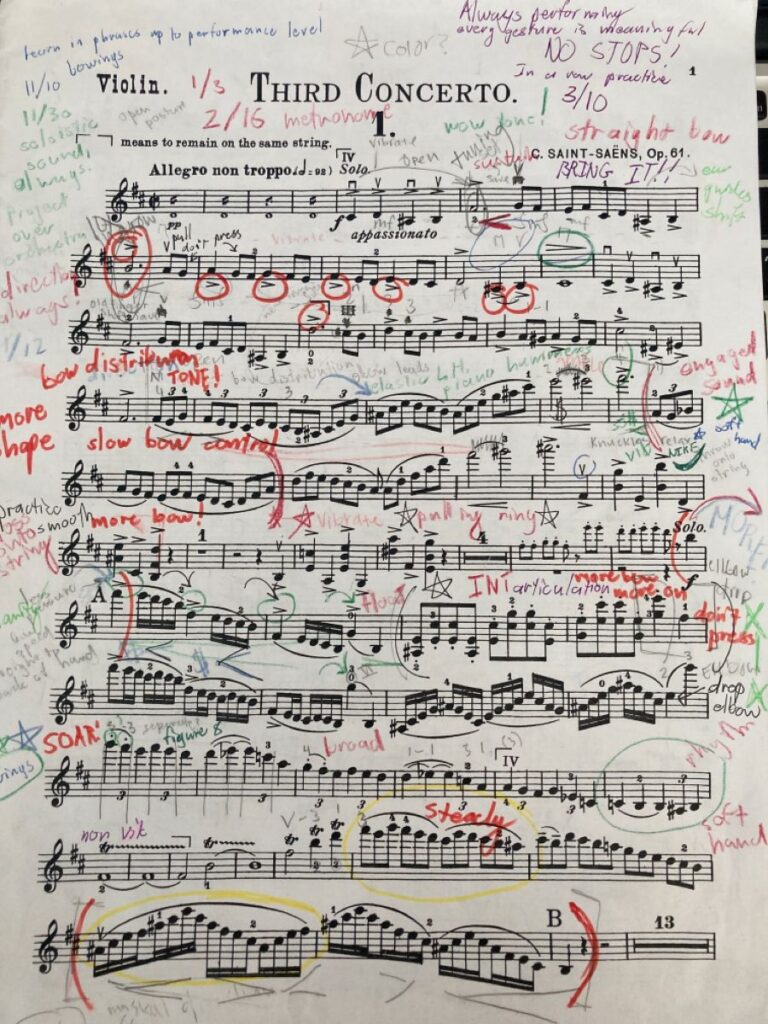
What is Mindless Practicing?
“Mindless practicing” is when you go through the motions of practicing without real focus or intention. In other words, you are practicing on autopilot.
It may not seem harmful at first, but if you keep it up, here is what can happen:
- muscle tension & injuries
- inefficient technique
- burnout
When you practice on autopilot, you tend to ignore how your muscles feel, which can lead to tendinitis, carpal tunnel, or focal dystonia (this is especially important for instrumentalists). It will also lock in bad muscle memory that is hard to undo. On top of all of that, hours of mindless practicing will lead to boredom, frustration, and a lack of progress because you didn’t consciously set any goals for your practice. Over time, this will drain both mental and physical energy, and you end up burning out.
In short, every time you play on autopilot, you train yourself to get worse.
Mindless practicing can and will hurt your technique, artistry, confidence, and your mental and physical health. It isn’t as widely talked about by teachers as it should be, which is why this article delves into the topic to help musicians currently going through this.
Well, Why Does it Happen?
1. Habitual Repetition. This normally happens when you’ve had your repertoire for a while. You can easily play it from memory, and your muscle memory is doing its work, so you are secretly bored with it. As a result, you start going through passages without any objectives.
2. Mental Fatigue. When you’re tired or distracted (or multitasking), it’s easier to default to autopilot.
3. A Lack of Good Practice Habits. I would argue that this is the root cause of mindless practicing. If you don’t have a clear structure for how to practice, then you are more likely to fall into the trap of mindless practicing.
As a musician, I know firsthand how easily practicing can become boring, repetitive, and dull. I’ve been there too—stuck in a cycle of mindless practicing—and honestly, it was really frustrating.
I still remember how determined I used to be whenever I entered a practice room, only to jolt back to consciousness a few hours later and realize I hadn’t made any progress.
That’s the cruel trick of mindless practicing.
It feels like hard work because of the time and effort you’re putting in, but you’ll only end up walking out of that practice room exhausted and wondering why you were only able to roughly get through one movement when you had set aside four hours to work on the entire piece.
I remember the anger and frustration that would overtake me every night, and soon, the truth became clear: things had to change.
How to Stop Mindless Practicing
At first, I thought the problem was a lack of motivation. I knew I was burnt out, and I thought that taking a few days off from practicing would help me relight the passion I had for music.
If anything, taking a break only made everything worse.
The other thing I could think of to do was browse the web for tips. I began reading books on concentration and even copied the practice routines of several famous musicians, but nothing seemed to work.
Through months of trial and error, I pinpointed the problem to my practice habits.
I had a lot of bad practice habits that built up over time, thanks to mindless practicing, and I knew I couldn’t “fix” these habits overnight, so I started small and went back to the basics.
I wrote out all the healthy practice habits I’ve always known existed but never actually incorporated into my practice sessions. Then, I started using them.
At first, I wasn’t successful at all, but I was more determined than ever to put an end to my bad habits, so I persisted.
As a result, I transformed into a different person. I was not only more positive about myself and practicing, but also enjoyed and looked forward to it.
Your Turn
If you are reading this article, then I’m assuming you are looking for ways to improve your current practicing habits.
You’ve come to the right place!
Mindless practicing is a difficult problem to solve, but it is definitely not impossible.
All you have to do is start.
And the first step toward that is to forgive your past self.
Did you do it?
Great.
I know it’s not easy, but the past is in the past, and we shouldn’t cry ourselves to sleep over it anymore, because starting this journey with a clear mind is the key to success.
Now, imagine where you wish to see yourself in ten years before internalizing this fact:
You will never reach where you envision yourself to be in ten years unless you start building good practice habits now.
Stop saying, “I’ll be better tomorrow.” Stop making excuses and pitying yourself. Stop letting other people’s negativity get to you, and stop comparing yourself to others. We are all on our own path, and we all experience moments of weakness.
The good news is, however, that weakness doesn’t have to define you. Change starts with small, intentional steps, and if you are looking for a little spark of inspiration, here are 5 practice habits that saved me from self-destruction: