

5 Habits That Will Change the Way You Practice
• ⋆ by Auriel ✴︎ September 16, 2025 ⋆•
If you are an aspiring musician, then you know the struggles of building an effective and efficient practice routine. No matter how passionate you are about music, not having good practice habits can lead to injuries, plateaus, and burnout.
As a musician myself, I know how easily practicing can become repetitive, boring, and worst of all: mindless.
The goal of this article is to help you look for ways to improve your practice sessions, and I hope that the five habits I’m about to share with you will give you a little spark of inspiration.
Let’s get to it!
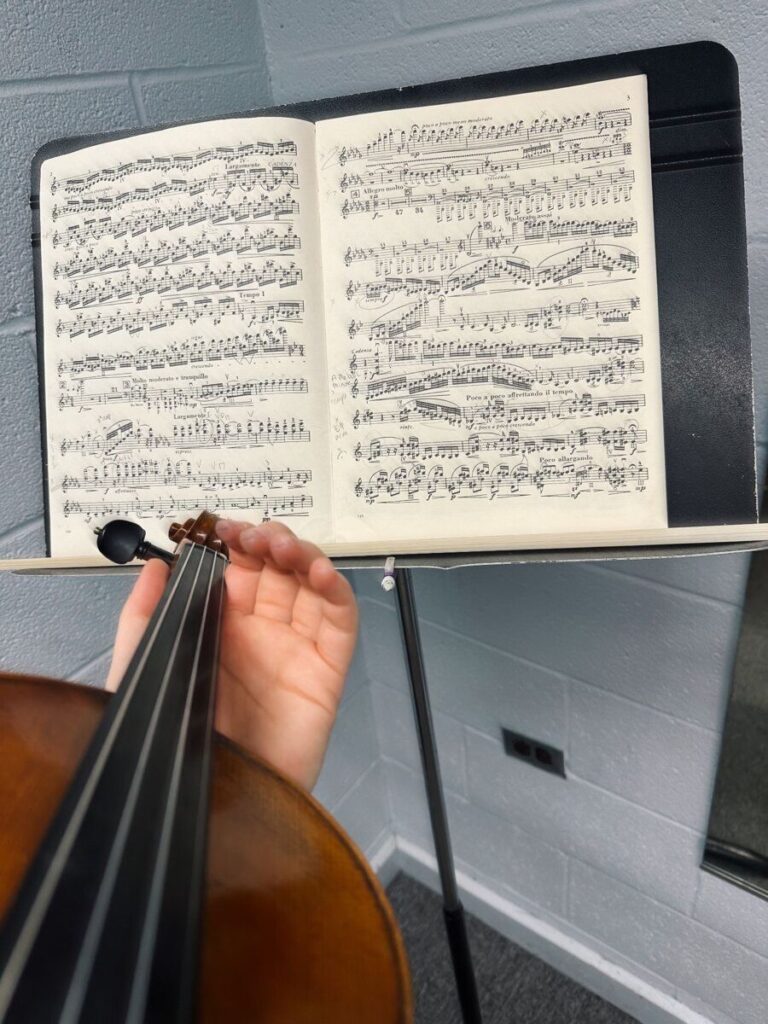
1. Plan Your Practice Sessions
You might’ve heard this one before, but if you’re not doing it, start!!
Mapping out your practice sessions is life-changing, and if you struggle with staying focused while practicing, this will help you tremendously.
Having a plan will make your progress tangible, and the satisfaction that comes from crossing items off a list is irreplaceable.
Now, don’t overthink this. To start, all you need is five minutes to set some goals.
2. Research Your Repertoire
You’ve most likely heard of this one as well, but we as students often neglect this very crucial step when it comes to learning repertoire.
Here is a very simple list of questions to test how well you know your rep:
1. Who is the composer, and what was happening in their life when this piece was written?
2. What era and style does the piece belong to, and what stylistic traits define that era?
3. What instrument(s) or voices was this piece originally written for?
4. What is the form/structure of this piece?
5. Can you identify the main themes and where they return or transform?
6. What key(s) does this piece use? Are there any modulations? (If yes, where are the modulations?)
7. Where is the climax of this piece, and how is it prepared musically?
8. Can you describe the mood or character of each section of the piece in words?
9. How does your part interact with the other parts in the score?
10. If you had to describe the piece in one or two sentences to a non-musician, what would you say?
3. Record Yourself Regularly
It’s one thing to feel like you’re playing well, and another thing to actually hear it back.
Recording yourself is one of the fastest ways to pinpoint small details in your playing. In a way, it also gives you an opportunity to be your own audience and teacher.
This habit is one of my favorites, and I am forever grateful to my teacher for recommending it, because it has helped me improve immensely.
Some things to pay attention to while listening to yourself play include:
- rhythm
- phrasings
- intonation
Make it fun! Try recording the same passage or piece several times with different tempos or phrasings and compare them. Which version did you prefer? Why?
Just like your practice plans, making recordings will serve as a progress log over time.
4. Practice Away From Your Instrument
Sometimes, the best breakthroughs happen when you’re away from the instrument.
Score studying, silent fingering, or even closing your eyes and visualizing the music engages your brain in a way that mindless repetition cannot.
It’s known as mental rehearsal, and, believe it or not, it’s one of the most powerful practicing methods out there.
Imagine yourself playing a passage perfectly. Hear every note in your head and feel all the physical motions in your body without actually touching the instrument.
Athletes use this technique to prepare for competitions, and musicians can benefit just as much.
In fact, Canadian pianist Glenn Gould often prepared works by reading through the score in his head long before touching the piano.
The ability to “hear” the music before you play it strengthens memory and ensures that when nerves or stage fright hit, your mind knows exactly where to go.
My favorite way of doing this is listening to recordings of repertoire I’m listening to and pretending I’m the one playing.
Here’s a quick 4-minute routine you can try in your free time:
I. Scan the score. Open your music and quickly mark the sections you want to focus on. Note the dynamics, articulations, and/or any tricky rhythms.
II. Check your rhythm. Clap, tap, or count aloud the rhythm of a difficult passage. (Use a metronome to keep yourself honest!)
III. Mental playback. Close your eyes and hear the passage in your head.
IV. Sing or hum. Sing the music out loud while looking at the score. This will connect pitch, phrasing, and breath to your inner ear.
And this brings us to our fifth and final practice habit…
5. Sing Your Part
If you’re an instrumentalist, then this habit is a crucial one for you. It is also the one you should consider adopting if you could only choose one from this list
Singing forces you to think like a musician—not just an instrumentalist—and it likely forces you out of your comfort zone too (it definitely forced me out of mine).
It doesn’t matter if you’re not good at singing. By vocalizing, you internalize pitch relationships and rhythms in a way your instrument alone can’t teach you.
Too often, instrumentalists get trapped in the technical aspects of practicing (fingerings, bowings, tonguing, etc.) and forget that music is ultimately about sound, expression, and the story you’re trying to tell. Singing brings you back to that foundation.
Here are some benefits that come with singing:
- Singing naturally builds long, expressive lines and forces you to think about where the music needs to “breathe.” (This is especially important if you’re playing a piece that requires you to make your instrument sound like a singer’s voice.)
- When you sing intervals or melodies, you internalize them in your ear instead of relying solely on finger positions or visual cues. This strengthens intonation and gives you a deeper sense of tonality.
- Singing with a metronome or conducting your part helps you feel rhythm in your body. You can’t fake your way through a passage when you have to vocalize it clearly.
In Conclusion…
Bad practice habits didn’t build up overnight, and neither will good practice habits. It’s a slow process of unlearning harmful patterns and replacing them with healthier, more intentional ones.
Just remember: quality over quantity.
It’s not always about practicing more; it’s about learning to practice better. By planning your sessions, researching your repertoire, recording yourself regularly, practicing away from your instrument, and singing, you’re no longer just fixing notes, but building a relationship with music.
Start small.
Pick one habit and try it this week.
Progress may feel invisible at first, but over time, these changes will add up, and one day, you’ll look back and thank yourself for taking the time and effort to replace bad habits with good ones.
Happy practicing!
Auriel